
Guide 03 — Standards & Stewardship
Quality Standards & Care Guide
What a handcrafted gift set must pass before it enters the directory, and the small, unglamorous routine that keeps walnut, stoneware and leather sound for a generation.
The acceptance standard
A set earns a directory entry only after it clears four gates: material documentation, joinery or forming inspection, finish verification and a handling review by two curators. Failing any gate returns the piece to the workshop with written notes, and roughly one in six submissions is returned.
This page is the public form of that internal standard. It is written so that a reader comparing two handcrafted gift sets can apply the same tests at a workbench, a gallery or a kitchen counter.
Timber, joinery and finish
Acceptance
- American black walnut, hard maple or Pennsylvania cherry, air-dried and stabilized to six percent moisture content.
- Grain matched across a lid and body; no pith, no bark inclusion, no machine-burned edges.
- Hand-cut dovetails, butterfly keys or splined miters that close without filler; joints that hold when the crate is racked dry.
- Food-safe beeswax and fractionated coconut oil finish, hand-buffed, with no film-forming lacquer or tinted stain.
Handling review
A curator opens and closes the crate forty times, lifts it by each corner, and listens. Squeal, rock or a lid that drops unaided is a rejection. The finger notch must accept a middle finger to the first knuckle, because most of our readers are lifting these sets with hands that have done decades of work.
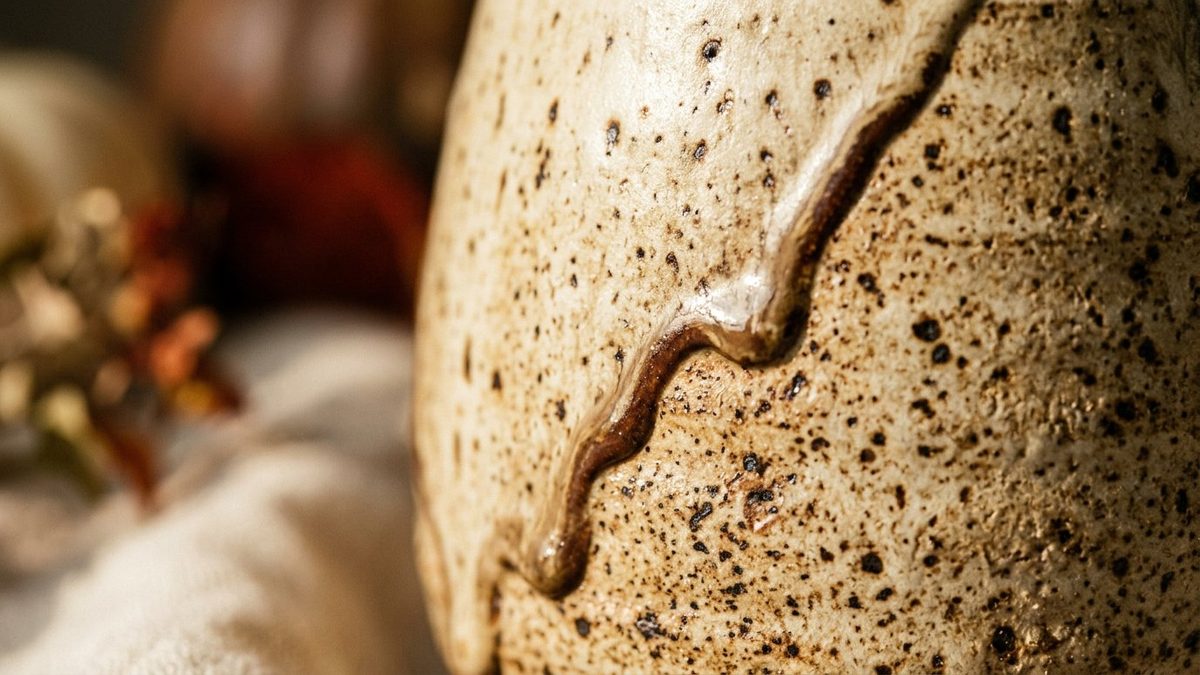
Stoneware and glaze
Acceptance
- Thrown or slab-built stoneware with a vitrified body, fired to cone six or higher.
- Speckled oatmeal or iron-fleck glaze, weighed in small batches, with no crazing visible under a raking light.
- Rims wiped and rounded; handles pulled, not extruded, and sized to a palm rather than a photograph.
- Base rings sanded smooth so the mug does not scratch a walnut table.
Use
Hand wash with warm water and a soft sponge. Stoneware tolerates a dishwasher on a low-temperature cycle, but the thermal shock of a hot cycle into a cold cupboard is what shortens a glaze's life; washing by hand is the safer habit. Avoid sudden transitions from freezer to boiling water, and never place a cold mug on a hot burner.
Leather and hardware
Acceptance
- Vegetable-tanned full-grain hide, dyed through rather than surface-painted.
- Saddle stitching in waxed linen thread, six stitches per inch, backstitched at both ends.
- Solid brass hardware, hand-set and burred on the reverse; no plated zinc that whitens with wear.
Conditioning
Condition twice a year with a neutral cream, worked in with a fingertip and buffed after twenty minutes. Skip silicone dressings and neatsfoot oil on vegetable-tanned goods; both soften the fiber until corners slump. Fresh water marks lift with a lightly dampened cloth and patient drying away from heat.
Care cadence by material
- Walnut crates
- Dust weekly with a dry cloth; refresh wax twice yearly. Keep out of direct sun and away from radiators.
- End-grain boards
- Oil monthly with beeswax conditioner, let stand overnight, buff dry. Never soak, never stack wet.
- Stoneware
- Hand wash after use; dry rim-up so the base ring dries fully. Store with a cloth between stacked pieces.
- Full-grain leather
- Condition twice yearly; keep away from forced-air vents. Let a wet journal dry open and flat.
- Brass hardware
- Leave the patina, or polish with a dry cloth and a touch of lemon oil once a season.
- Linen and velvet
- Vacuum on the lowest setting with a brush head; air in shade for a day each year.
Storage between giving seasons
Store a crate latched with the lid ajar for a week after use, so the velvet and timber can release humidity. Then close it and lay the provenance card on top of the liner. Target forty to sixty percent relative humidity; a finished basement in the Northeast and an arid Southwestern closet present opposite risks, and both are answered by a stable interior shelf rather than a garage.
Repair and refinishing
Loose hardware is tightened with a screwdriver that fits the slot, never a knife. Light scratches on oiled walnut lift with a fine abrasive pad followed by wax; deeper dents are steamed out by a restorer rather than sanded away. A board that has gone grey from over-washing is revived with three coats of conditioner. Brass studs and clasps are replaceable; the leather they sit in is not, which is why the hardware is solid.
Audit rhythm
Each partner workshop is visited once a year and sampled quarterly. Every audit re-reads the ledger inside a finished crate against the directory entry it belongs to, because a directory is only as trustworthy as the last time somebody checked the joinery rather than the copy.
Specification questions that this guide does not answer are welcome at the curation desk — see About & Contact for weekday hours. The directory's material attributes are summarized on the signature showcase.